Indoor riding arenas get talked about like they’re all the same. They’re not. Every riding arena we build ends up reflecting how that owner rides, trains, and their day-to-day needs.
We’ve built indoor arenas across Pennsylvania and the Mid-Atlantic for horse owners who just want to stay out of the weather on their own property, and for others building out a full equestrian facility for commercial use with barns, stalls, and a long-term vision.
Over dozens of builds, we’ve learned what our customers consider the must-haves and the nice-to-haves. Here are how some of those conversations go, and our view on some of the best upgrades when building an indoor riding arena.
Riding Arenas Come In All Shapes And Sizes
Different customers need different things.
That’s something we see on just about every project. Two people can call about the same size arena and end up building completely different structures.
- Some clients just want a simple, functional space to ride and stay out of the weather – maybe it’s nothing more than a shell with an arena and quality footing
- Others want something that looks impressive and feels like a true equestrian facility – luxury amenities like tack rooms, changing rooms, etc.
- Most projects fall somewhere in between
- The key difference isn’t only budget, it’s also how the space will be used day-to-day
The Most Requested “Amenity” Isn’t a Feature At All
Before doors, before finishes, before anything else, people mostly want to feel like they’re working with someone who can walk them through the process and not leave them guessing.
Most of the conversations we have early on are about helping people sort through their options and understand what makes sense for how they plan to use the space. Some come in thinking they need everything, others aren’t sure where to start. Our role is to help them think it through.
The reality is that there aren’t that many experienced riding arena builders out there, and our team brings a unique skillset to these conversations. Even if we don’t work together on your new riding arena, we hope we can add value through fact-finding together about how the arena will be used, how it connects to barns or stables, what kind of riding and training is happening, and what’s going to hold up the best for YOUR needs.
By the time we get into specific features, many of the big decisions have already been made.
In the end, people want to feel confident in the decisions they’re making and know the building is going to work the way they expect it to. That’s what we’re here for.
1. The Basics Almost All Arenas Include
Every indoor riding arena starts with the same core pieces. Whether it’s a simple horse arena or a larger equestrian arena designed for training and jumping, these are the things that make it usable.
You’ve got to have good lighting, rider guards, footing, walls, and a roof.
A riding arena without proper footing, lighting, and protection from weather conditions sort of defeats the purpose. In our builds, that usually means:
- LED high-bay lighting laid out so you don’t get dark spots or shadows when riding at night
- Treated lumber or composite rider guards that can take abuse from horses without constant repair
- A properly prepared base layer (stone + compaction) before any footing ever goes in
- Footing systems that match the discipline, whether that’s sand, sand/rubber blends, or specialized mixes for jumping vs flat work
- Steel or engineered wood structures designed to handle snow loads and wind common in PA and the Mid-Atlantic
These are the non-negotiables. Everything else builds from here.
2. Mid-Range Upgrades We Frequently Build
This is where most indoor riding arenas shake out: not bare-bones and not over-the-top, just a well-built space that works for daily riding and training.
Most clients in this range are thinking through functionality, layout, and how the arena connects to their stall barn or stables. Often it includes:
- Adding translucent wall panels along one or both long sides so you don’t have to rely entirely on electric lighting during the day
- A lean-to or attached space for equipment storage, grooming, or a small tack area
- Strategic door placement (large sliding or overhead doors) so you can get equipment in and out easily and improve airflow in the summer
- Slightly taller sidewalls to make the space feel less closed-in, especially for riders working young or sensitive horses
- Basic viewing areas or a heated room where a trainer or parent can sit out of the cold
- Continuous ridge vents, cupolas, and engineered airflow systems that move heat and moisture out of the building
These aren’t flashy upgrades, but they’re the ones people notice every single day when they’re using the building.
3. Higher-End Features That Change the Look And Feel Completely
When the barn budget increases, indoor riding arenas start to feel completely different. Now we’re talking about custom designs that reflect a full equestrian lifestyle. This is where you start seeing things like:
- Clear-span trusses or heavy timber framing that eliminate interior posts and open up the entire riding space
- 20’+ sidewalls and peak heights that comfortably accommodate jumping programs and advanced training
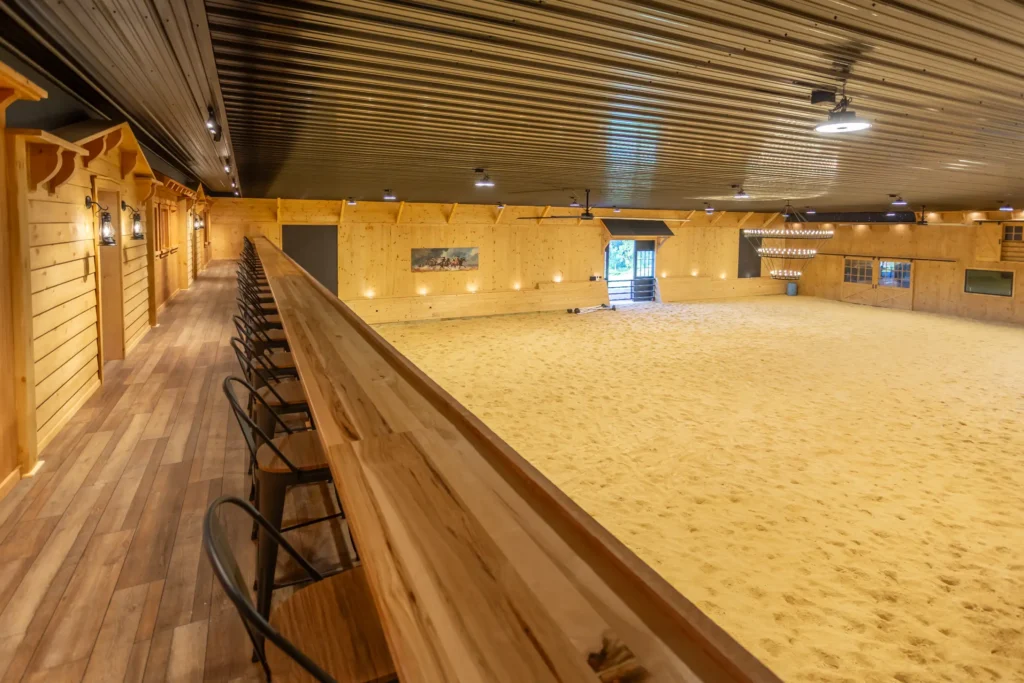
- Full-length viewing galleries or second-floor spaces overlooking the arena
- Integrated barn connections so you can go stall-to-arena completely under roof without stepping outside
- High-end sliding or hydraulic doors that open entire end walls for ventilation and access
- Heating or cooling systems for larger barn areas
- Interior wood liners or kick walls built with durability in mind, not just aesthetics
At this level, the arena becomes part of a larger facility, something built not just to ride in, but to operate and showcase.
What People Often Talk About But Then Decide Not To Do
Finished walls and ceilings with drywall are usually the first to go.
On paper, a lot of features sound like must-haves. In real numbers, finished walls, finished ceilings, and full interior staining can move the price faster than most people expect without changing how the riding arena performs for horses and riders.
That’s why those upgrades often get scaled back in favor of keeping the structure solid and the footing right.
Where It Makes Sense to Spend More
If there’s one thing we try to help people with, it’s where to spend and where to hold back on an indoor riding arena project. Not every upgrade improves how the space works.
We usually guide people to focus on the structure itself, the way the layout flows, the quality of the materials, the ventilation, the natural light, and the footing that holds up well under daily riding and training. Those are the decisions that affect how the arena performs year after year, through changing weather and heavy use.
Spending in the right places makes the building better to use, not just better to look at.
The Real Question Isn’t What You Can Add
Indoor riding arenas are a big investment, and no two projects from our team look the same.
The difference usually comes down to how clearly the project is planned from the beginning and whether you have the right builder helping you sort through the decisions.
If you’re thinking about building an indoor riding arena, the first step is a conversation about how you plan to use the space, what kind of horses and training you’re working with, and what matters most to you long-term.
At Double S Construction, we build indoor arenas, horse arenas, and barns . If you want to talk through your project or get a free quote, our team is always available.