When someone starts planning an indoor riding arena or new horse barn, the first questions are usually practical ones: How big should it be? What will it cost? Where should it sit on the property? What kind of upgrades are worth paying for?
Those are all good questions. We’ve covered indoor arena indoor riding arena costs and amenities before, but this article is about some decisions that are more nuanced.
Not because people are careless. Usually, it’s because they’re focused on the big, obvious pieces of the project. Then once the building is up, the smaller planning decisions start showing themselves: the airflow, the wall protection, the footing, the windows you wish were placed differently, and the interior finishes that determine whether the arena feels like a true equestrian space or just a large building with footing inside.
At Double S Construction, we build indoor riding arenas, horse barns, timber frame structures, custom homes, and additions throughout Pennsylvania and the Mid-Atlantic.
We know that a good indoor riding arena isn’t about getting under roof…it has to work after the dust settles.
Before You Build: The Short Version
If you’re planning an indoor riding arena, here’s the advice we would give before you get too far down the road.
- Don’t start with the assumption that every arena is basically the same.
- Don’t wait too long to talk about footing.
- Don’t treat riding guards and lower wall protection like trim.
- Don’t ignore sidewall finishes just because they are not structural.
- Don’t assume insulation, heat, cooling, and airflow can be figured out later without consequences.
- Don’t add windows without thinking about how they affect the riding environment.
- Don’t plan the arena as if it has nothing to do with the barn, driveway, drainage, equipment, or future buildings.
That may sound like a lot, but this is exactly why it helps to work with an equine builder who has been around equine projects before.
You don’t have to know every answer when you first call, you just need someone who knows which questions to ask. That’s us!
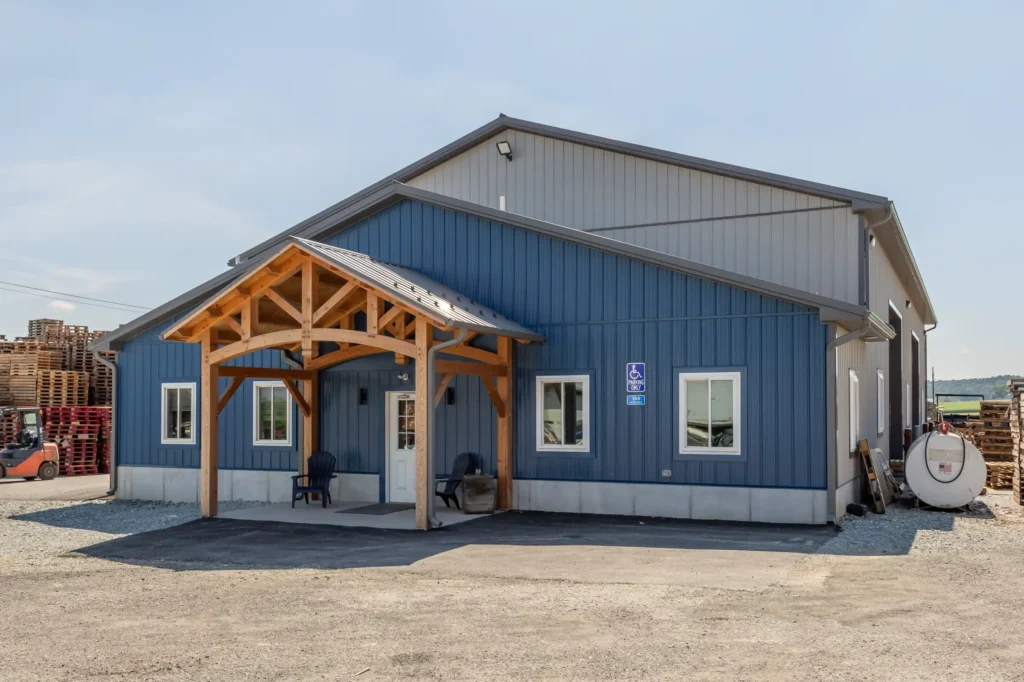
First, Be Clear About What You’re Building
An indoor riding arena is not the same thing as a storage building, equipment shed, or basic pole barn. An arena is a working environment for horses and riders. That means the building has to account for movement, dust, moisture, light, noise, comfort, safety, equipment access, and long-term wear.
That’s why we have to ask practical questions early.
How will the arena be used: Private riding? Lessons? Training? Boarding? Events? Will it connect to a horse barn now or later? Will equipment need to get inside for maintenance? Will riders be using the space in the heat of summer and the cold of winter?
Those answers truly, truly will shape the project.
Indoor riding arena construction services shouldn’t begin with a generic shell and then figure out the details later. The building should be planned around the way it will be used from day one.
Don’t Treat Your Riding Arena Footing Like A Leftover Decision
Your arena footing is one of the biggest parts of the riding experience, but it’s also one of the places where a builder needs to know what lane he’s in.
I’ll be direct: we’re not footing specialists.
We understand how important footing is. We know enough to take it seriously, and when a client needs footing guidance, we recommend people who focus on that work and understand the materials, base preparation, installation, and maintenance side of the decision.
That’s the right way to handle it because a poor footing decision can make a beautiful arena frustrating to use. The surface affects traction, cushion, dust, maintenance, and how horses feel working in that space over time.
So no, footing shouldn’t be the thing you “figure out later.” It should be part of the early planning conversation, especially if you’re building a serious indoor horse riding arena. The right footing approach depends on the discipline, the number of horses, the amount of traffic, maintenance expectations, and the level of performance you need from the surface.
Our job isn’t to pretend we’re the footing company. Our job is to help make sure the right conversation happens at the right time and to bring in the footing providers when ready. The great news is, we know footing experts up and down the east coast.
Plan The Lower Walls Before The Horses Start Using Them
The lower wall system in an arena takes a beating. That’s why riding guards, sometimes called kick walls, should be discussed early instead of tacked on at the end.
On many of our arena projects, we use Southern Pine tongue-and-groove 2×8 boards. It’s a practical, solid option that gives the lower walls protection and helps the inside feel finished.
There are higher grades and more refined options available too, and some projects call for that. A premium private facility or a more polished equestrian property may need a different level of finish than a simple daily-use arena.
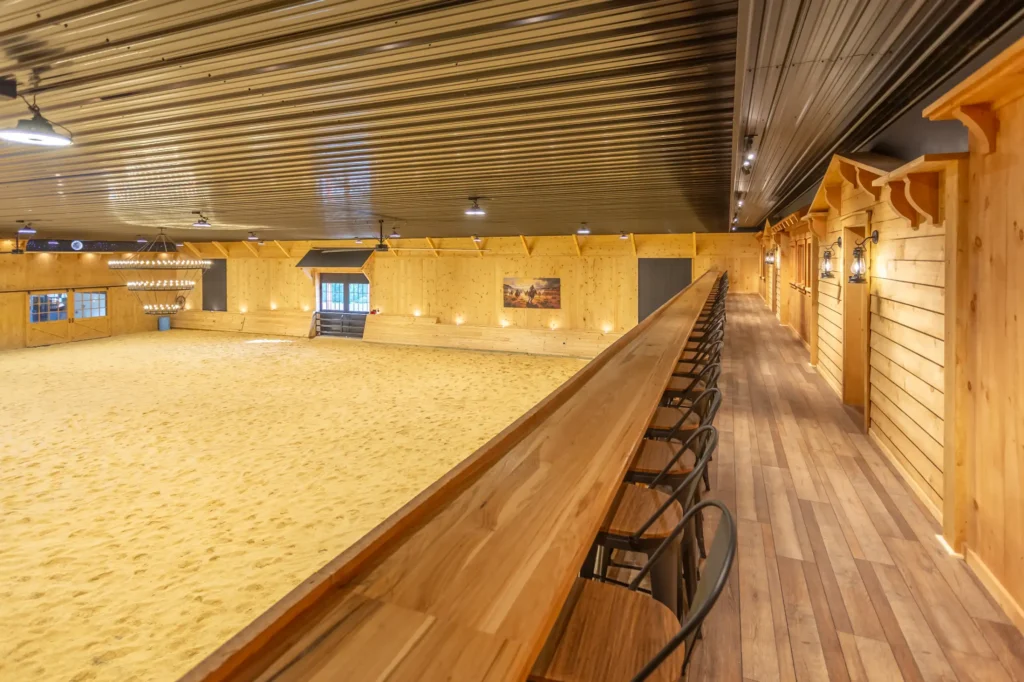
But the basic point is that riding guards aren’t decoration, they protect the building and the animals. They help define the riding space and they can make the arena feel intentional instead of patched together. If you’re comparing riding arena construction services, pay attention to whether the builder talks through these practical details. The lower wall system is not the flashiest part of the project, but you’ll notice it every time you ride.
Wall Finishes Change More Than The Look
Sidewall finishes are easy to underestimate too. From the outside, a lot of indoor arenas look similar. Big roof, big doors, long walls, and plenty of open space.
Inside, the sidewalls make a huge difference. They affect durability, how bright or dark the building feels, whether the arena looks like a true equestrian facility or just an unfinished shell, and how the building handles the ordinary abuse that comes with horses, equipment, dust, and daily use.
Not every arena needs luxury finishes. We believe in spending money where it makes sense. A well-planned indoor arena can be straightforward and still feel clean, durable, and professional. That comes from thinking through the sidewalls, the lower wall protection, the materials, and the interior layout well before construction is moving.
Air Movement Is A Key Detail
A riding arena is a big enclosed space with horses moving, footing being worked, doors opening and closing, and people spending time inside. Air that doesn’t move well becomes really uncomfortable.
Good airflow helps with heat, moisture, and general comfort. It can also make the arena feel more usable on days when the weather is less than ideal. This is one of those details that sounds simple until it’s missing.
Ceiling fans aren’t glamorous, and neither are vents, openings, doors, and airflow decisions. When we talk through indoor riding arena construction, we want to know how the building is going to breathe. Where can air move? Where will heat collect? How will doors and fans help? Are there windows or openings that support the use? The structure has to make sense, but the space also has to feel alive enough to use.
Insulation, Heat, And Cooling Should Be An Early Conversation
Heating and cooling decisions vary a lot from one arena to another.
Some clients want a more comfortable year-round facility. Some simply want to avoid the worst cold. Some are more concerned about summer heat and air movement than winter use. Some are building a private arena for family riding, while others are creating a busier facility with trainers, boarders, and guests coming through.
We’re not saying every indoor riding arena needs full climate control. Many don’t, but every arena needs a conversation about how it’ll feel in the seasons when it will be used most.
Insulation, heat, cooling, and condensation all need to be talked about before the building is too far along. A large indoor space behaves differently than people expect. It can get hot quickly and it can hold moisture. It can feel cold and damp. It can create real comfort problems that are hard to solve later without more disruption and more cost.
That’s especially true here in Pennsylvania and across the Mid-Atlantic, where weather can change meaningfully from one season to the next.
Windows And Natural Lighting
Natural light can make an indoor arena feel completely different, but windows shouldn’t be scattered around just because they look good on a drawing. They need to make sense for the way the arena will be used. You have to think about glare, durability, placement, airflow, and how the windows work with the rest of the interior.
Good natural light makes the space more pleasant for riders and handlers. It can reduce the heavy, closed-in feeling some arenas get. It can also make a higher-end facility feel more finished without turning every decision into a luxury upgrade.
Think Past The Arena Footprint
A riding arena is rarely the final piece of a property. Sometimes it’s built beside an existing barn. Sometimes it’s part of a larger plan that will include a new horse barn, event barn, bank barn, storage space, or connected walkway. Sometimes the owner knows the whole vision from the start, but not always.
Either way, the arena should be planned with the rest of the property or expansion in mind.
How will horses move from barn to arena? Where will equipment enter? Where will trailers go? Where will people park? How will water move around the site? Where might a future barn or addition make sense?
These questions affect daily use and future construction. We always appreciate when a client is willing to talk through the bigger picture, even if we’re only building one phase right now.
Planning An Indoor Riding Arena?
At Double S Construction, we’re not trying to make every arena project as complicated or expensive as possible. Some clients need a simple, functional indoor arena that gives them a reliable place to ride out of the weather. Some want a more finished facility with upgraded materials and a stronger visual presence. Some are building the arena as part of a larger barn or equestrian facility.
Our job is to help sort through what makes sense, talk through the details, recommend specialists when the project calls for it, and help clients think about the parts they may not know to ask about yet.
If you’re thinking about building an indoor riding arena in Pennsylvania or anywhere in the Mid-Atlantic, bring us the rough idea, the wish list, and the questions you’re still sorting out. We build indoor riding arenas, horse barns, event barns, bank barns, timber frame buildings, barndominiums, custom homes, and additions for discerning clients who care about getting the details right.
Contact Double S Construction to start a conversation about your indoor riding arena construction project.