Takeaways
- A new indoor riding arena can cost as little as a few hundred thousand dollars for a basic shell and arena space, while luxury equine arenas can run into the multi-millions depending on the scale of the amenities.
- Working with an equine construction company like Double S is the best way to streamline the process and get a finished indoor arena that you’re proud of: we have the experience and we know the materials and surfaces your horses need.
One of the questions we hear the most from horse owners is simple.
How much does it cost to build an indoor horse arena?
We wish it had a straightforward answer, but the truth is that indoor arenas are highly custom projects, and indoor riding arena cost can change a lot depending on the arena’s size, the materials used, site preparation, and all of the amenities you decide you’d like to include.
Instead of throwing out a number that might not apply to your situation, we thought it would be more helpful to explain how these projects unfold in the real world. Over the years we’ve built everything from simple arena shells to large custom equine facilities with finished interiors, viewing areas, and luxury materials.
The reality is that most indoor riding arena projects grow and change as they take shape. Here’s how the conversation around cost goes.
A Real Project That Started Small And Grew
For an example of how pricing changes, here’s a real-world story.
One customer first reached out to us back in 2020 about building a riding arena. We talked through some ideas at the time, but the project didn’t move forward right away. A couple of years later he reached back out when he was ready to move ahead with an indoor horse riding arena on his property.
When we started discussing the project seriously, he was thinking about a budget of around $400,000. That’s fairly common when people first start exploring the idea of building an indoor riding arena or covered horse arena.
Once we worked through the design and started planning the structure, the initial plan came in closer to $600,000. That covered the main building and getting the arena structure up.
Then something very typical happened.
As the building started going up and the owner could actually see the structure coming together, he began adding features.
First he added porches.
Then additional roof sections.
Then interior insulation.
Then a finished ceiling.
Then upgraded interior wall finishes with beautiful wood panels.
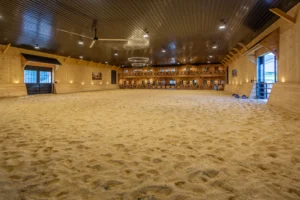
Each change made the indoor riding arena nicer and more comfortable to use, but each upgrade also added to the arena cost. By the time everything was finished, the arena had grown into something far more elaborate than the original concept, and it was close to a million dollars at completion.
That is very common with custom equine projects. Once owners see the building taking shape, they often realize they want to invest a little more to create a space they’ll enjoy using for many years. The cost of a horse riding arena often increases, though that’s through thoughtful add-ons that improve usability and property value.
The Simplest (and Cheapest) Version Of An Indoor Arena
Not every project grows into a million‑dollar facility. Some horse owners simply want a practical building where they can ride when the weather conditions aren’t cooperating!
In its most basic form, an indoor arena is essentially a large post‑frame or timber frame building that creates a covered horse arena or indoor horse riding arena. A straightforward structure may include:
- A post‑frame building structure
- Large engineered trusses with clear span beams
- Metal roofing
- Metal siding
Structural framing for the arena shell
That type of building functions as a riding arena shell, or at least that’s what we call it. It protects riders and horses from snow, rain, extreme weather conditions, and harsh sun, while still allowing natural light through side lights or large openings.
Projects built this way tend to stay closer to the lower end of the investment range, often several hundred thousand dollars depending on square foot size and site preparation costs.

Why Arena Costs Can Vary So Much
The biggest drivers behind indoor riding arena cost are size, materials, and site preparation needs.
Some owners want a simple horse riding arena where mounted riders can train during winter weather conditions. Others want a facility that becomes the centerpiece of their farm and significantly improves home value and property value.
As conversations develop, the focus often shifts from simply putting up a building to designing a space that works beautifully every day. That’s when additional features enter the discussion.
- Interior ceilings and insulation
- Finished wood wall systems
- Upgraded siding materials
- Standing seam metal roofing
- Large porches or roof extensions
- Stone accents or upgraded exterior finishes
- Lighting and HVAC systems
- Climate control systems
- Ventilation improvements for air quality
- Surface maintenance considerations
Each of those decisions can move the project in a different direction financially and influence the overall indoor riding arena cost.
Other factors in the cost of an indoor riding arena ionclude land clearance needs, local labor rates (when needed) building permits, and permitting requirements in your area.
Arena Size Makes A Big Difference
Arena’s size is often the biggest factor affecting arena cost.
A small private riding arena might be built for an individual horse owner who simply wants a protected space for private use during bad weather. Larger riding arenas are often designed for training operations or boarding farms that need room for multiple mounted riders at once.
Common indoor riding arena sizes include:
- 60 x 120 for private riding
- 70 x 140 for smaller arenas
- 80 x 200 for dressage horse riding arena layouts
- 100 x 200 or larger for professional indoor horse riding arena facilities
As the building gets wider and longer, the square foot total increases rapidly. More square foot area means more structural work, more footing materials, and higher site preparation costs.
Arena footing and footing installation are also major components. Proper arena footing helps reduce dust and improve safety for both riders and horses. Footing costs vary depending on footing materials and whether you include drainage layers or advanced footing systems.
The Role Of Design In Indoor Arena Projects
One thing we’ve learned over the years is that careful planning and design early in the process create the best outcomes.
Many people contact us when they are still early in the planning stage. Sometimes they are still looking for land, speaking with their bank, or discussing the project with family members.
When someone is serious about moving forward, we usually recommend moving into a design agreement.
That allows us to create drawings and renderings so the owner can actually see what the indoor riding arena will look like and how things fit together. It also allows us to begin narrowing down materials and construction methods so we can develop a realistic project number.
Without that design work, most pricing conversations are just rough guesses.
With it, we can begin turning an idea into a real plan and avoid costly repairs or design mistakes later.
How We Guide Owners Through The Process
Every riding arena project begins with a conversation.
We talk through how the arena will be used, what arena’s size makes sense for the property, budget expectations, site conditions, and what kinds of materials the owner is interested in.
Sometimes we’ll walk through multiple options so owners can see how different materials or design choices affect the final investment. Certain materials are more cost effective while others create a higher‑end look, better energy efficiency, or longer‑term durability.
Our role as a general contractor is to help owners understand those tradeoffs so they can make more informed decisions.
One interesting thing we’ve noticed over the years is that the customers who are most serious about moving forward tend to ask the most questions. They want to understand every aspect of the project, from site prep and building codes to structural maintenance and long term expenses like regular upkeep or replenishing footing.
Others are earlier in the process and may simply be gathering information. That’s part of the journey as well.
What Serious Arena Projects Often Look Like
Many indoor riding arenas begin somewhere in the several hundred thousand dollar range depending on arena’s size, site preparation, and features.
A straightforward riding arena shell may stay closer to that starting point.
A large custom indoor horse riding arena with upgraded materials, finished interiors, climate control, artificial lighting, and additional features can grow into a million‑dollar project or even more.
The range is wide because every arena is different and every owner has a different vision for how their horse riding arena should function.
The First Step Toward Building Your Arena
If you’re thinking about building an indoor riding arena, the best place to start is with a conversation about your goals.
Every property is different. Every horse operation has different needs. Every owner has a different vision for how their arena should function. Some want a practical covered horse arena where they can ride year‑round without worrying about weather. Others want a showpiece indoor riding arena that becomes the centerpiece of their farm. Our job is to listen, help shape the design, and build a structure that fits both the property and the people who will use it every day.
Indoor arenas are a significant investment, but when they are designed and built well, they can completely change how a farm operates and how often riders are able to work with their indoor horse training program.
If you’re exploring the idea of building one, we’re always happy to talk through the possibilities.
Double S Construction is based in Pennsylvania and builds custom barns, equine facilities, and indoor riding arenas throughout the Mid‑Atlantic region. Many of the projects we take on are large custom builds where owners want something that will last for decades and truly elevate their farm. But we do simple shells too –– the commonality is that we know equine facilities well.
Whether you’re thinking about a straightforward riding arena shell, exploring indoor riding arena kits (though that’s not us), building a new horse barn, or planning a high‑end indoor horse riding arena facility, the best place to start is with a conversation. We do barndominiums and home additions, too!
We’re always glad to talk through ideas, answer questions, and help you start shaping the arena you have in mind. Give us a call to learn more!